The Watchers

The Watchers

Sunday, 16 October 2022

Angela Lansbury (1925-2022)

Like many, we at the Watchers were deeply saddened to hear of the death of the incomparable Dame Angela Lansbury, who passed away on Tuesday October 11th 2022, at the age of 96. 

Today- Sunday October 16th 2022-  would have been her 97th birthday, so it feels an appropriate day for us to celebrate her amazing life and career.  

In a career spanning a staggering 80 years, she worked tirelessly in film, television, and on the stage, creating some iconic characters and imbuing every role with dignity and gravitas (whether that's as a scheming housemaid, a shrewd amateur detective, or a singing teapot). Esteemed movie critic Pauline Kael called Lansbury a "picture redeemer" because of the unvarying quality of her performances in films of varying quality.

Born in Regent's Park, London in 1925, the daughter of an Irish actress and an English politician, Lansbury moved to the United States with her mother and two younger brothers in 1940 to escape the Blitz (her father had died of cancer in 1935, when she was nine years old). She studied acting at the Feagin School of Drama and Radio in New York, before moving to Los Angeles in 1942.


At a party thrown by her mother, Lansbury met the playwright and screenwriter John Van Druten who had co-written the screenplay for Gaslight, a movie based on the play of the same name by Patrick Hamilton. A dark melodrama about a wife whose husband is trying to drive her mad in order to distract her from his criminal activities (incidentally, where the phrase “gaslighting” comes from), Van Druten recommended Lansbury for the supporting role of the conniving Cockney housemaid Nancy Oliver, opposite Charles Boyer and Ingrid Bergman in the lead roles. She was accepted for the part, which would be her feature film debut. Director George Cukor would later go on to write: "On the first day of shooting, even though she was only 17 and had no experience, she was immediately professional." The film received seven Oscar nominations, with a Best Supporting Actress nod for Lansbury (although she lost to Ethel Barrymore for her performance in None But The Lonely Heart). 


After Gaslight, she appeared in National Velvet (1944) as Edwina, the older sister to Elizabeth Taylor’s character Velvet. In 1945, she appeared as ill-fated music-hall actress Sibyl Vane in Albert Lewin’s version of Oscar Wilde’s The Picture Of Dorian Gray opposite Hurd Hatfield and George Sanders. Lansbury won the Golden Globe for Best Supporting Actress – Motion Picture for her performance, and received her second Oscar nomination (again in the Best Supporting Actress category, although she lost to her National Velvet co-star Anne Revere). 

In September 1945, Lansbury married for the first time, to American actor and visual artist Richard Cromwell. She was 19, he was 35. The marriage lasted less than a year, with Lansbury filing for divorce in September 1946. The marriage was troubled, as Cromwell was actually gay and married in the misplaced hope that he would become straight. Despite the divorce, Cromwell and Lansbury remained friends until Cromwell’s death in 1960. Lansbury met her second husband, fellow British expatriate Peter Shaw, in December 1946 at a party hosted by her Dorian Gray co-star Hurd Hatfield; she and Shaw married in London in 1949, and became naturalized American citizens in 1951 (although both retained their British citizenship, via dual nationality).

Lansbury had signed a seven-year contract with Metro-Goldwyn-Mayer (MGM) when she was cast in Gaslight. But despite being a double Oscar nominee before the age of 20 (to date, still the youngest actress to receive two nominations), the studio didn’t seem to know what to do with her and she was, according to her Gaslight director George Cukor, “consistently miscast”.  Lansbury herself voiced her frustration, stating "I kept wanting to play the Jean Arthur roles [i.e. screwball comedy leading ladies], and Mr. Mayer kept casting me as a series of venal bitches." 

Clockwise from top left: State Of The Union, Samson And Delilah, The Harvey Girls, The Three Musketeers

She played a rough-and-ready honkytonk saloon singer opposite Judy Garland in The Harvey Girls (1946), a nightclub singer who vies with Esther Williams for William Powell’s attentions in The Hoodlum Saint (1946), the “London specialty” in the fictionalized Jerome Kern biopic Till The Clouds Roll By (1946), Queen Anne in The Three Musketeers (1948), and a Republican newspaper magnate with eyes on being the “power behind the throne” of the US President in the Frank Capra-directed State Of The Union (1948) with Katharine Hepburn and Spencer Tracy. She was loaned out to Paramount in 1949 to play Semadar in Cecil B. DeMille’s Biblical epic Samson And Delilah, with Victor Mature and Hedy Lamarr in the lead roles, and played another scheming maid in the film noir Kind Lady (1951), although one of her co-stars in that film was her mother, Moyna Macgill (mother and daughter also appeared together in The Picture Of Dorian Gray).

Unhappy with the roles she was being given at MGM, Lansbury instructed her manager to terminate her contract with them in 1952. Throughout the early 1950s, she began to appear more on television, although also made several films as a freelance actress, including swashbuckler The Purple Mask (1955) which she later called “the worst movie [she] ever made” and musical family comedy The Court Jester (1956) where she played Princess Gwendolyn opposite Danny Kaye, Basil Rathbone, and Glynis Johns. In 1957, she made her Broadway debut in the French farce Hotel Paradiso. As with many endeavours in Lansbury’s early career, whilst the production received a mixed reception, she earned good reviews for her role. Towards the end of the 1950s, she appeared in two films- The Long, Hot Summer and The Reluctant Debutante (both 1958)- which, according to her biographer Martin Gottfried, restored her status as “an A-Picture actress”. 


As the 1960s began, Lansbury returned to Broadway in a production of Shelagh Delaney’s post-war British kitchen-sink drama A Taste Of Honey. She played Helen, the garrulous, common, often absentee mother of main character Jo (played by Joan Plowright who- despite playing her daughter- was only four years younger than Lansbury). She also put in a sympathetic supporting turn as a widowed beauty salon owner in Delbert Mann’s The Dark At The Top Of The Stairs (1960). 

Continuing an unwelcome trend in her career, she appeared as Elvis Presley’s disapproving mother in Blue Hawaii (1961), despite there only being a nine-year age difference between her and Presley. As Lansbury once pointed out, "Hollywood made me old before my time." In 1962, she played another overbearing matriarch in John Frankenheimer’s adaptation of the novel All Fall Down, with Warren Beatty, Brandon deWilde, and Karl Malden as her children and husband. It was her performance in this film that led Frankenheimer to cast her in his adaptation of Richard Condon’s paranoid political thriller The Manchurian Candidate. 


For anyone who only knows Lansbury from roles in the latter half of her career, and see her as a cosy cuddly maternal figure, take a watch of The Manchurian Candidate and prepare yourself. She is absolutely terrifying as the glacial Mrs. Eleanor Shaw Iselin, mother to war hero Sergeant Raymond Shaw (Laurence Harvey). A scheming ideologue who will do whatever it takes to ensure her senator husband will reach the highest echelons of power, she commands the screen in every scene she’s in. She was only three years older than Laurence Harvey. Lansbury gives such a steely, powerful and frankly unnerving performance (her monologue where she coolly gives Raymond the orders on when and how he is to assassinate the presidential nominee is an absolute masterclass) that an Oscar nomination was virtually guaranteed. 

Indeed, her performance is one of the two Oscar nods the film received (the other being Best Film Editing). She received her third competitive Oscar nod (again in the Best Supporting Actress category) but lost out to Patty Duke for The Miracle Worker. In terms of the biggest robberies ever seen at the Oscars, this is right up there with Judy Garland and Bette Davis. Although Lansbury did get a second Golden Globe for Best Supporting Actress- Motion Picture and received the National Board of Review Award for Best Supporting Actress for her performances in this and All Fall Down. In a 2007 article for Time Magazine, Lansbury’s performance as Mrs. Iselin featured in their countdown of the Top 25 Greatest Villains in cinema. And if Frank Sinatra had gotten his way, the role would have gone to Lucille Ball instead...  

Throughout the rest of the 1960s, Lansbury appeared in several notable screen productions – appearing as Jean Harlow’s mother in the 1965 biopic Harlow (although she was only six years older than Carroll Baker who played the titular actress), and featuring as Claudia Procula- the wife of Pontius Pilate (Telly Savalas)- in George Stevens’ four-hour sprawling Biblical epic The Greatest Story Ever Told (1965), although she was cut almost entirely from the final edit -  but one of her most defining roles would take place on Broadway. 


Lansbury’s first assay into Broadway musical took place in 1964, appearing in the infamous production of Arthur Laurents’ and Stephen Sondheim’s Anyone Can Whistle which closed after just nine performances. Things would be different the second time around, as she played the lead role as the glamorous, bohemian Mame Dennis in Jerry Herman’s musical version of Patrick Dennis’ 1955 novel Auntie Mame. The 1958 film version (and a subsequent non-musical stage version) starred Rosalind Russell in the title role, but she turned down the stage musical version. Lansbury actively sought out the role, and was 41 years old when the show opened in Broadway’s Winter Garden Theatre in 1966. 

The role of Mame Dennis is a demanding one, with ten song and dance numbers throughout the show- including the wonderful “We Need A Little Christmas”, “If He Walked Into My Life”, and the fabulously catty duet “Bosom Buddies”- and a number of elaborate costume changes; it’s also one of the finest musical theatre roles for actresses in the second age of their careers. Reviews of her performance were overwhelmingly positive, praising her “wit, poise, [and] warmth” and it garnered Lansbury the first of her five Tony Awards, winning Best Leading Actress in a Musical at the 1966 awards ceremony. She would reprise the role onstage several times, although was passed over in favour of Lucille Ball when a filmed version of the musical was released in 1974 (which opened to almost universally poor reviews). 

In 1968, Lansbury was given the Hasty Pudding Woman Of The Year award by the Hasty Pudding Theatricals Society of Harvard University, for her "lasting and impressive contribution to the world of entertainment". She was offered the lead role of ageing lesbian actress June Buckridge in Robert Aldrich’s The Killing Of Sister George, but declined; the role went to Beryl Reid (reprising her role from a previous stage production of the play). She was also interested in playing the role of Mrs. Robinson in The Graduate, which eventually went to Anne Bancroft. Her second Tony Award, again for Best Leading Actress in a Musical, came in 1969 for her performance in Dear World (a Jerry Herman musical based on Jean Giraudoux's play The Madwoman of Chaillot.) Lansbury was cast in the starring role of 75-year-old Countess Aurelia, despite her actual age of 44.


Due to a number of family issues (with both her children involved in drug use, and her daughter Deidre falling in with associates of the Manson family), Lansbury moved with them to a farmhouse in County Cork, Ireland in 1970. She didn’t work for a year whilst helping to get her family sorted out but then returned to screens in 1971 as the scatterbrained trainee witch Miss Eglantine Price in Bedknobs And Broomsticks, a loose adaptation of two children’s books by English author Mary Norton. Combining animation and live-action footage, the film is a cherished part of a lot of children’s childhoods, and a lot of that is down to the warmth and charm of Lansbury’s performance. Her double act with David Tomlinson (who plays the charlatan “Professor” Emelius Browne) is particularly lovely and she gives a sweet poignancy to the Oscar-nominated song “The Age Of Not Believing” (where she laments the tricky parts of growing up). Lansbury received a Golden Globe nomination for Best Actress in a Motion Picture - Comedy or Musical for her performance.

In 1973, Lansbury returned to the West End stage taking on another monumental musical theatre role – that of the ultimate stage mother “Mama” Rose in the Sondheim-Laurents-Styne musical Gypsy (based on the memoirs of noted ecdysiast [striptease artist] Gypsy Rose Lee). Rose is a fascinating character; flirty, forthright, deeply insecure and damaged, domineering but with her heart (kind of) in the right place. Is she a monster, or does she do monstrous things for the sake of her children and her own survival? Rose also gets several of the most powerful musical standards in the whole of musical theatre with songs such as “Some People”, “Everything’s Coming Up Roses” and the tour-de-force that is “Rose’s Turn”. Initially, Lansbury had not wanted to take the role, due to the frankly monolithic original performance by Ethel Merman which casts a long shadow over the role even now. But she took the role, got rave reviews and standing ovations in the West End and took the role on tour in the US during 1974 and to the Winter Garden Theatre on Broadway from 1974-75. This would garner her a third Tony Award, again for Best Leading Actress in a Musical. Around this time, she was offered- but turned down- the role of Nurse Mildred Ratched in One Flew Over The Cuckoo’s Nest; the role would go to the late Louise Fletcher, who won an Oscar for her terrifying turn as the sadistic matron.

After finishing the US tour of Gypsy, she joined the National Theatre at the Old Vic in 1975 to play Gertrude in Hamlet, opposite Albert Finney in the lead role. Directed by Peter Hall, the production was part of the opening season in the National’s new home on the South Bank in 1976. It opened to mixed reviews, and Lansbury later said she believed the role to be “too restrained”. In 1978, she appeared back on Broadway playing Anna Leonowens in The King And I for 24 performances whilst lead actress Constance Towers was on a short break. 


In 1978, Lansbury appeared in her first film since
Bedknobs And Broomsticks, taking the role of the flamboyant, inebriated romance novelist Salome Otterbourne in the star-studded adaptation of Agatha Christie’s Death On The Nile. Directed by John Guillermin, Lansbury played opposite screen luminaries such as Maggie Smith, Bette Davis, David Niven, Mia Farrow, and her former brother-in-law Peter Ustinov (who was previously married to Lansbury’s half-sister Isolde). Whilst Salome could easily just be played for comic relief as the sozzled writer throwing out the occasional inappropriate barb, Lansbury finds a more sensitive and almost tragic side to the character, and she plays well against Olivia Hussey (who plays Salome’s long-suffering daughter Rosalie). She received a BAFTA Film Award nomination for Best Supporting Actress for her performance. 


In 1979, Lansbury returned to Broadway to originate the role of Mrs. Nellie Lovett, maker of the worst pies in London and accomplice to a murderous barber, in Stephen Sondheim’s Sweeney Todd: The Demon Barber Of Fleet Street. A dotty but seemingly harmless old bird, their entire cannibalistic endeavour is her brainwave (as shown in the superb Act One closing number “A Little Priest”). Starring opposite Len Cariou, Lansbury would get a fourth Tony Award for her role and would tour the US during 1980 with George Hearn replacing Cariou as Sweeney. Also in 1979, she appeared as the mysterious Miss Froy in a remake of the Hitchcock classic The Lady Vanishes, opposite Elliott Gould and Cybill Shepherd.

Top (l-r): The Mirror Crack'd; The Last Unicorn. Bottom (l-r): A Talent For Murder; The Company Of Wolves

In 1980, Lansbury appeared in another star-studded Agatha Christie adaptation, but this time in the lead role of Miss Marple in The Mirror Crack’d. Surrounded by a cast of stars such as Elizabeth Taylor, Tony Curtis, Kim Novak, and Rock Hudson, Lansbury eschews the broader depiction of the character made popular by Margaret Rutherford and becomes a much quieter but no less perceptive sleuth. Her stall is set out in the opening scene when, watching a creaky old murder mystery film in the village hall, she correctly works out the ending when the projector stops working. She had signed on to do a two further films as Miss Marple but they sadly never materialized. After this, she voiced the witch Mommy Fortuna in the 1982 animated feature The Last Unicorn. She would also star opposite Laurence Olivier in a 1983 BBC television movie called A Talent For Murder where she played a wheelchair-using crime writer, and appeared as the superstitious grandmother in Neil Jordan’s 1984 gothic fantasy horror The Company Of Wolves, based on the story of the same name of Angela Carter. 


In 1984, Lansbury took the role for which she will almost certainly be best remembered: that of former teacher turned crime writer turned amateur sleuth Jessica Fletcher in the TV series Murder, She Wrote. However, considering how indelibly linked she is to the role, she was not the first choice to play Jessica: the role was originally offered to Jean Stapleton (Edith Bunker in All In The Family) and Doris Day, who both turned it down. And the rest, as they say, is history... 

Mainly based in the coastal community of Cabot Cove, Maine (although often branching out to places like New York or Los Angeles, and even Hawaii when the show had a crossover episode with Magnum, P.I.), the show ran for twelve seasons between 1984 and 1996, airing 264 episodes in total, with four further television movies (South By Southwest, A Story To Die For, The Last Free Man, and The Celtic Riddle) airing between 1997 and 2003. Over the course of the 264 episodes, there were 286 homicides; were Cabot Cove a real place, it would outrank Honduras as the murder capital of the world! 

In 1989, Lansbury co-founded the production company Corymore Productions, which started co-producing the television series with Universal Television. Between 1989-1991, Lansbury’s involvement in the show lessened due to the rigours of the American network television filming schedule, so Jessica would sometimes appear in episodes at the beginning and end to introduce a story told to her by one of her friends. From 1992-1996, Lansbury became an executive producer of the show, allowing her more freedom with the role. 

A staple of Sunday night television in the US (usually airing at 8:00pm), CBS decided to move the show to Thursday evenings for its twelfth season (1995-1996) putting it in direct competition with the sitcom Friends. There’s a somewhat arch comment on this with the title of the very last regular Murder, She Wrote episode being “Death By Demographics” where Jessica comes to the aid of a veteran radio books show host who is replaced by an uncouth shock jock. By the time the series ended in 1996, it tied with the original Hawaii Five-O (1968-1980) as the longest-running detective drama series in television history.

It might seem odd to point this out but, in the 1980s, it was rare to see an older actress in the lead of a show. Lansbury was 59 when the show began airing and was 78 when the final TV movie was shown. She received a Primetime Emmy nomination each year from 1985-1996 for Outstanding Lead Actress In A Drama Series, but scandalously never won once. She would also get 10 Golden Globe nominations for Best Performance by an Actress in a Television Series - Drama (1985-1993, and in 1995), winning four times (in 1985, 1987, 1990, and 1992). Lansbury felt a great affinity for the character, once saying “Jessica Fletcher is about as close to the sort of woman I might have been, had I not been an actress”. 


In 1987, Lansbury headlined a show in Chicago to raise money for AIDS research. It was the first major AIDS benefit held in Chicago, and it raised one million dollars. Lansbury would continue to support both the American Foundation for AIDS Research (AmFAR) and the Broadway Cares charity, raising sums estimated to be in the millions for both causes. At the event, she said “Tonight isn't about what we lost or might lose. It's about that step forward when we might conquer this thing and get on with the business of living. Here we celebrate life and together we fight." 

In terms of philanthropy, it was also well known that, on Murder, She Wrote, Lansbury would often push for actors who were in need of credited work to keep various benefits or insurances to be cast in credited guest roles on the show. In 1988, she released a video titled Angela Lansbury's Positive Moves: My Personal Plan for Fitness and Well-Being, in which she outlined her personal exercise routine (with a book of the same name published two years later). She hosted the Tony Awards ceremony for three consecutive years (1987, 1988, and 1989) and, as of 2022, she holds the record for most Tony Awards shows hosted, with five (she had host stints in 1968 and 1971, as well as the consecutive 1980s ceremonies).  

Whilst working on Murder, She Wrote, Lansbury’s ability to undertake other roles was somewhat curtailed although in 1990 she was able to do some voice acting work for a Disney film that would become another iconic role for her: that of Mrs. Potts in Beauty And The Beast. She gives a wonderfully warm and maternal performance as the castle cook turned into a teapot, showing real care and concern for both her master and his new guest, and providing the film’s iconic title ballad as Belle and the Beast dance together. 

The story goes that Lansbury was initially unsure whether she could record the song (as she didn’t feel her ageing singing voice would be suitable), but directors Gary Trousdale and Kirk Wise asked if she could record a version of it as a back-up in case they were unable to find anyone else to sing it. She agreed and arranged to fly to New York to record the song with a live orchestra; her plane was delayed by several hours due to a bomb threat and (as these were the days before mobile phones were ubiquitous) she was unable to contact the studio until she arrived in New York. Eventually, she made it to the studio, recorded the song in one take... and that take is what appears in the finished movie. 

Lansbury would reprise the role for the 1997 straight-to-video sequel Beauty And The Beast: The Enchanted Christmas, and also voice the character in other Disney properties (such as the video game Kingdom Hearts II). In 1991, she was awarded the BAFTA Film Award for Outstanding British Contribution to Cinema, and was appointed Commander of the Order of the British Empire (CBE) for services to drama in the 1994 Queen’s Birthday Honours. She would also voice the Dowager Empress Marie in Don Bluth’s 1997 animated film Anastasia and appeared on-screen in Fantasia 2000 to introduce the section based on Stravinsky’s “Firebird Suite”. In 2000, she was one of the five Kennedy Center Honorees- essentially a lifetime achievement award for contributions to American culture- along with Chuck Berry, Mikhail Baryshnikov, Plácido Domingo, and Clint Eastwood.


In January 2003, Lansbury suffered a deep personal tragedy when Peter, her husband of 53 years passed away. At the time, she felt that- going forward- she may do a cameo or a character part but wouldn’t undertake a leading role. In March of that year, she took part in a staged reading of the screenplay of backstage drama All About Eve- with Stockard Channing as Margo and Calista Flockhart as Eve- where she played the sardonic Birdie Coonan (played by Thelma Ritter in the 1950 film) with a broad Irish accent. In 2005, she played Eleanor Duvall in “Night” and “Day”, a two-episode crossover story between two spin-offs in the Law & Order franchise (the latter for Trial By Jury, the former for Special Victims Unit). In these episodes, Lansbury plays a powerful, well-connected and wealthy woman whose son- played by Alfred Molina- is suspected of rape and murder. She received a Primetime Emmy nod for Outstanding Guest Actress in a Drama Series for her performance.


Also in 2005, Lansbury played the haughty and domineering Great Aunt Adelaide in family fantasy Nanny McPhee. As the hand that grasps the purse-strings for the widowed Cedric (Colin Firth) and his family, she’s delightfully villainous (and yet still able to take a luminous green pie to the face with something approaching dignity). When Lansbury was suggested for the role, screenwriter and star Emma Thompson initially said “Don’t be ridiculous, that’s like asking for a slice of the moon to be delivered.” Well, that slice of moon was delivered. Lansbury credited the film (and Thompson) with “pull[ing] me out of the abyss” after her husband’s death.

In 2007, Lansbury returned to Broadway after an absence of 23 years in the Terrence McNally play Deuce. In it, she played Leona Mullen, a former tennis player who- along with her former doubles partner Midge Barker (played by Marian Seldes)- is being honoured at a women's quarterfinals match at the US Open. It’s a major role and Lansbury admitted “I had no intention of coming to Broadway. I didn’t really want it. I thought maybe I’d do something with an ensemble... But what I’m doing today, this huge thing, was totally unlooked for.” Reviews of the play itself were mixed, with reviewers calling it “a wilted bouquet of a play”, “as wispy as ectoplasm” and a “flimsy excuse for a comedy”, although Lansbury’s performance was praised, with one reviewer describing her as “vitally and indelibly present”.  She received a Tony Award nomination for Best Actress in a Play for her performance. 


In 2009, Lansbury again took the stage, playing eccentric medium Madame Arcati in a revival of Noël Coward’s charming supernatural comedy Blithe Spirit. A very important character within the play- as her séance is what brings the ghost of Charles’ ex-wife back from beyond (who then proceeds to wreak havoc in the household)- it is a part that does a lot with a limited amount of actual stage (or screen) time. Reviews for the production and for Lansbury’s performance were overwhelmingly positive, and she added a fifth Tony Award to an already stacked mantelpiece (this time for Best Featured Actress in a Play). With this win, she equalled the record held by Julie Harris for most competitive Tony wins by an individual (and they would only be surpassed by Audra MacDonald in 2014 with six wins, although both Harris and Lansbury were also given [non-competitive] Lifetime Achievement Awards, with Lansbury receiving hers earlier in 2022).


In 2009-2010, Lansbury appeared in a production of Sondheim’s A Little Night Music, playing Madam Armfeldt, the aged former courtesan, opposite Catherine Zeta-Jones (who plays her actress daughter Desiree). Lansbury once described Madam Armfeldt as an “interesting kind of character, [who] doesn’t have to hold the whole show.” The character has a particularly lovely solo (“Liaisons”) where she discusses her chequered past with various noblemen and royalty with her granddaughter. Lansbury went on to receive another Tony nomination for her performance (for Best Featured Actress In A Musical, thus having been nominated in all four competitive acting categories for actresses).

In 2011, she made a rare appearance on film, playing restaurant owner Mrs. Selma Van Gundy in Mr. Popper’s Penguins, opposite Jim Carrey. She also then returned to the Broadway stage in 2012 to play women’s rights activist Sue-Ellen Gamadge in The Best Man by Gore Vidal (opposite John Larroquette, James Earl Jones, Candice Bergen, and Eric McCormack). She was also cast in Wes Anderson’s comedy-adventure The Grand Budapest Hotel to play the ancient Madame D. but, due to a scheduling conflict with the Australian tour of the stage version of Driving Miss Daisy (in which she played Miss Daisy opposite James Earl Jones), she had to withdraw; the role was later played by Tilda Swinton. 

In November 2013, she was one of the Honorary Oscar recipients at the Academy’s Governors Awards, along with Steve Martin and costume designer Piero Tosi. Her citation describes her as “an entertainment icon who has created some of cinema's most memorable characters, inspiring generations of actors.” She was presented the award by Robert Osborne of Turner Classic Movies (TCM) with Emma Thompson and Geoffrey Rush paying tribute to her, describing Lansbury as “glorious, incandescent and wonderful” and “the living definition of range”. 


2014 was something of a banner year for Lansbury, as first she was made a Dame in the New Years honours list for her services to drama, charitable work and philanthropy (and was bestowed the honour by the late Queen Elizabeth II at Windsor Castle in April) before reprising her role as Madame Arcati in Blithe Spirit in the West End. The production was at the Gielgud Theatre on Shaftesbury Avenue, a venue which brought great sentimental pleasure to her because it was where her mother Moyna had made her London acting debut in 1915. In 2015, she was nominated for her first ever Laurence Olivier Award (in the Best Actress in a Supporting Role category) and- at the age of 89- she won the award. 

In 2017, she appeared in the BBC miniseries Little Women (adapted from Louisa May Alcott’s novel of the same name) as Aunt March, opposite Emily Watson as Marmee, Maya Hawke as Jo, and Michael Gambon as Mr. Laurence. Reviewers praised her "magnificent imperiousness", stating she "steals her every scene". It had been rumoured that Lansbury would be back on the Broadway stage in 2017, heading a production of Enid Bagnold’s 1955 play The Chalk Garden, in the role of Mrs St. Maugham; she later withdrew from the full run of the show, but did do a staged reading of the play at Hunter College in New York. 

In 2018, she voiced Mayor McGerkle in the Illumination Entertainment animated version of The Grinch (with Benedict Cumberbatch in the lead role) and also made a glorious cameo in 
Mary Poppins Returns as the Balloon Lady, a kindly old woman selling balloons in the park which leads into the rousing final number “Nowhere To Go But Up”. The part was written to be a cameo role for Julie Andrews (who portrayed Mary Poppins in the original film) but Andrews turned the role down, as she felt her presence would unfairly take attention away from Emily Blunt. There’s something so beautifully warm about Lansbury’s presence in this very minor scene that rounds out the sequel so nicely. At the 2019 Palm Springs International Film Festival, Mary Poppins Returns won the Ensemble Cast Award. She reunited with Mary Poppins Returns co-star Dick Van Dyke in family fantasy drama Buttons: A Christmas Tale in what would be her last main role on film. 


In 2019, she appeared in another staged reading of a play, this time taking on the role of the incredibly grand and ever-so-slightly intimidating Lady Bracknell (she of “a handbag?” fame) in The Importance Of Being Earnest in a benefit for Roundabout Theatre Company at the American Airlines Theatre on Broadway. Other members of the cast included Lily Rabe as Lady Bracknell’s daughter Gwendolyn, John Glover as Rev. Canon Chasuble, and Hamish Linklater as John Worthing. After her passing earlier this week, it was confirmed that Lansbury would be making a cameo in Rian Johnson’s Glass Onion: A Knives Out Mystery, along with her frequent collaborator Stephen Sondheim. This will mark her (and, also his) final screen appearance. 


As you can imagine, the passing of someone with the stature of Angela Lansbury has been met with a veritable deluge of tributes. Former Disney chief exec Bob Iger described her as "a consummate professional, a talented actress, and a lovely person". Bebe Neuwirth remembered her as "a divine artist and a great broad", whilst writer J. Michael Straczynski “found her to be gentle of heart, strong of spirit, and exceedingly wise.” Actor and playwright Harvey Fierstein summed her up in one phrase: “She, my darlings, was EVERYTHING!”

Lights in the West End were dimmed in her honour on the evening of October 12th, with Broadway theatres doing the same yesterday evening (October 15th). TCM have also announced that they will be a 24-hour movie marathon to celebrate her life and amazing body of cinematic work on Monday November 21st, starting with National Velvet and ending with the 1982 filmed version of Sweeney Todd. 

One of the sweetest and most unexpectedly moving tributes came not from anyone associated with the film, television or theatre industries, but from NASA. In her memory, they shared a picture taken by the Spitzer Space Telescope of a cluster of newborn stars which were found in a rosebud-shaped (and rose-coloured) nebulosity known as NGC 7129, in a touching echo of the enchanted rose from Beauty And The Beast. 

"Tale as old as time..."

In an interview in 1998, Lansbury was asked how she would want to be remembered. She answered: “I'd like to be remembered as somebody who entertained - who took one out of oneself - for a few minutes, a few hours - transported you into a different venue - gave you relief, gave you entertainment, and gave you joy and laughter, and tears - all those things. I would like to be remembered as somebody who was capable of doing that.” She certainly did all of that and more. 

Our thoughts are with her family and friends at this time.


Sunday, 27 March 2022

Awards Season 2022: The 94th Academy Awards


Well... that was certainly something...

Did anyone have "angry actor smacks award host for insulting his wife, then proceeds to win an Oscar" on their Oscar bingo? No? Nor did I. But that's one of the things about live events: anything can happen. 

The telecast began with a spectacular performance of Best Original Song nominee "Be Alive" from King Richard by Beyoncé from the Compton tennis courts where Venus and Serena Williams practiced when they were growing up. Talk about starting with a bang!

This was the first time in three years that the Oscars had a host and, if I'm honest, I really didn't feel that having a host (or hosts) added anything to the evening. And to be honest, that's nothing to do with who they had as hosts: it was always going to be a poisoned chalice for whoever took the job and Amy Schumer, Wanda Sykes, and Regina Hall didn't do too badly. Let's put it this way: they were more Jimmy Kimmel than James Franco & Anne Hathaway. 


The three-act structure seemed to have gone by the wayside, with all three hosts periodically popping up throughout; the providers of the music changed each hour, but that was about it. There were a couple of funny lines (Amy Schumer referring to herself as "Melissa McCarthy said no" raised a chuckle, as did her "Did I miss anything?" when she reappeared after the Smith-Rock debacle; the not-so-subtle two fingers up to Florida's "Don't Say Gay" bill was also a joy), but generally the skits felt clunky and unfunny- Regina Hall playing up to being the thirsty singleton went on too long, and somehow we were meant to be OK with her feeling up Josh Brolin and Jason Momoa when you just know that if a male host tried to do the same with (for example) Helen Mirren and Zendaya, people would be frothing at the mouth.   

I actually didn't necessarily mind how they edited in the eight awards that were given out in the hour before the telecast began (although perhaps the irony of having the Best Achievement in Editing as one of the eight whilst relying on editors to seamlessly put that footage into the live show was lost on them). I did mind the utterly haphazard manner in which they interspersed them throughout, and I further minded that a lot of the material that was added in lieu of those eight awards were irrelevant puff.

The much vaunted performance of Encanto's "We Don't Talk About Bruno" was not, in fact, a full performance of the song. It started out as a performance, but then metamorphosed into this rap-heavy mishmash of "Celebrating The Oscars". That was one of a couple of utterly baffling decisions made throughout the night: why have three extreme sportsmen to host the 60 Years Of Bond montage? And why not immediately follow that montage with the live performance of "No Time To Die"? 


The whole "Oscars Cheer" moment- which, apparently, was The Flash entering speed force in Zack Snyder's Justice League- added nothing, and neither did the Fan Favourite Award (which armies of Snyder fans hijacked with Army Of The Dead after the four-hour Justice League cut was deemed ineligible as it was a re-release). I found the choice of music for the In Memoriam section to be a bit odd, but I did like the individual tributes to Sidney Poitier, Ivan Reitman, and Betty White. 

The guest hosts varied from funny to excruciating- Shang-Chi's Simu Liu and Tiffany Haddish fell into the latter camp (mostly because of Haddish's increasingly erratic behaviour), although I did like having a trio of live-action Disney princesses (Cinderella's Lily James, Aladdin's Naomi Scott, and The Little Mermaid's Halle Bailey) to announce Best Animated Feature.  


But the big talking point of the night is going to be what happened when Chris Rock presented the Best Documentary Feature award. Will Smith stormed the stage and smacked Rock in the face after Rock made a "GI Jane 2" crack about Jada Pinkett Smith (Pinkett Smith has alopecia and has been very honest and open about her struggles with the condition, and looked ever-so-slightly pissed off at Rock's remark). On Sky Cinema, the censors weren't quick enough to catch either of Smith's f-bombs, or Rock's dazed "Will Smith just smacked the shit out of me". Initially, I wasn't sure whether it was a bit, but it soon became clear that it wasn't. Smith's tearful speech as he returned to the stage to claim the Best Actor Oscar featured an apology, but to the Academy and fellow nominees. 


Onto the awards themselves.

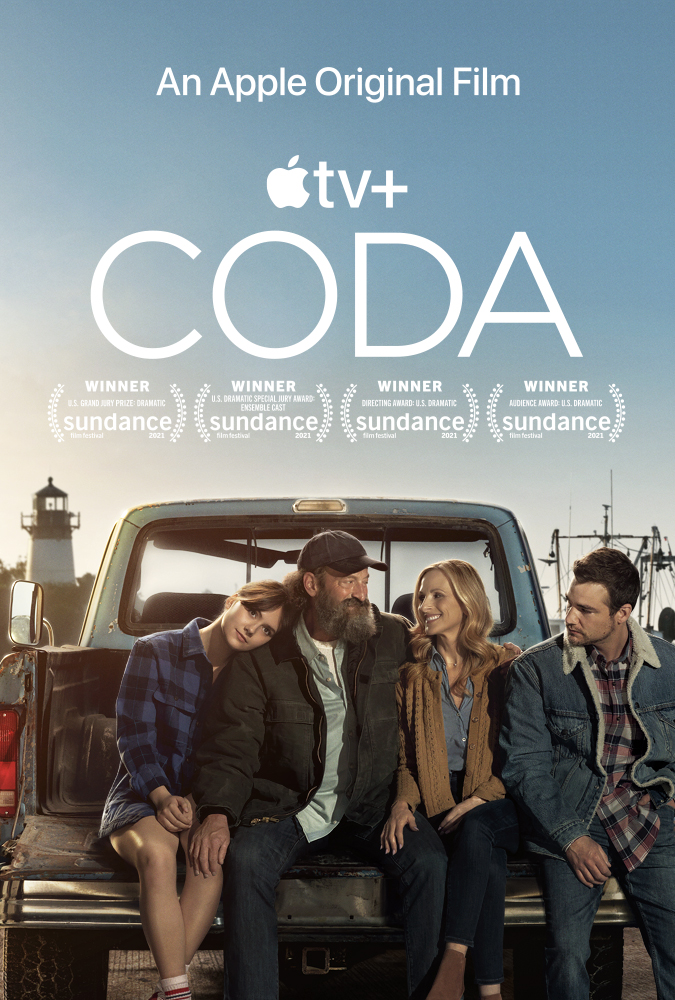
Six out of six for the first time in a long time. Ariana DeBose, Troy Kotsur, and Jessica Chastain all gave very emotional acceptance speeches, all touching on themes of acceptance and finding your place in the world. I was also pleased that "No Time To Die" won Best Original Song, and I was chuffed that Kenneth Branagh- who has been nominated in seven different categories- won his first Oscar, for the screenplay of Belfast. I was also over the moon that CODA won Best Picture. It was a real feel-good end to a rocky show.  

This Oscars featured a number of firsts: we saw the first openly queer woman of colour (Ariana DeBose) win an acting award; the first Deaf actor (Troy Kotsur) win an acting award; this is the first time consecutive Best Director Oscars have been won by female directors (Chloé Zhao and Jane Campion), and it's the first time a film distributed on a streaming platform (CODA, via Apple TV+) has won Best Picture.


Unsurprisingly, Dune was the biggest winner of the evening, taking home six awards (four of which were won before the telecast started). CODA won three Oscars, winning each category it was nominated in, as did The Eyes Of Tammy Faye which won in both its categories. 

Despite multiple nominations, Don't Look Up, Nightmare Alley, Being The Ricardos, Flee, Licorice Pizza, The Lost Daughter and The Tragedy Of Macbeth all went away empty-handed. 


Below is the full list of winners at the 94th Academy Awards (the eight categories marked with the asterisks were given out ahead of time):

Best Motion Picture of the Year: CODA

Best Actor: Will Smith (King Richard)

Best Actress: Jessica Chastain (The Eyes Of Tammy Faye)

Best Supporting Actor: Troy Kotsur (CODA)

Best Supporting Actress: Ariana DeBose (West Side Story)

Best Director: Jane Campion (The Power Of The Dog)

Best Original Screenplay: Kenneth Branagh (Belfast)

Best Adapted Screenplay: Siân Heder (CODA)

Best Animated Feature Film of the Year: Encanto

Best International Feature Film of the Year: Drive My Car

Best Cinematography: Dune

* Best Film Editing: Dune

* Best Production Design: Dune

Best Costume Design: Cruella

* Best Makeup and Hairstyling: The Eyes Of Tammy Faye

* Best Original Score: Dune

Best Original Song: "No Time To Die" (No Time To Die)

* Best Sound: Dune

Best Visual Effects: Dune

Best Documentary (Feature): Summer Of Soul (...Or, When The Revolution Could Not Be Televised)

* Best Documentary (Short Subject): The Queen Of Basketball

* Best Animated Short Film: The Windshield Wiper

* Best Live Action Short Film: The Long Goodbye


Congratulations to all winners!

Well, that is awards season done and dusted for another year. Thank you for coming with me on this journey. Tonight certainly hasn't been boring, that's for sure.

Until next time.


Awards Season 2022: Tez's Official Oscar Predictions


Tonight, the great and good of Hollywood will convene to celebrate the best of film-making in 2021 at the 94th Academy Awards.

For the first time in three years, the Oscars will have a host. Well, actually, it'll have three. The ceremony will be structured into three "acts" with a different host overseeing each act. The three hosts will be Amy Schumer (Trainwreck, I Feel Pretty), Regina Hall (Scary Movie, Girls Trip), and Wanda Sykes (Monster-In-Law, Evan Almighty). Great choices to oversee what is likely to be a fairly controversial ceremony.

I will reserve judgement to see how it's handled in the telecast, but I think that the decision that the producers have made to give nearly a third of the awards- the three short subject awards, Make-Up and Hairstyling, Production Design, Editing, Sound, and Original Score- out an hour before the telecast begins and editing in the winners' acceptance speeches throughout the main ceremony is a short-sighted and fairly disrespectful one, especially since it seems to have come at the behest of broadcaster ABC in an attempt to bring the runtime of the telecast down and provide "more time for comedy, film clips and musical numbers" (i.e. try and get the viewership up, hence the cynical inclusion of a live performance of Encanto break-out song and TikTok favourite "We Don't Talk About Bruno"). We'll see how seamless this is tonight. 

Nonetheless, it has become a tradition for me to predict the nominations and the winners in the main six categories (the four acting categories, Best Director and Best Picture). I've done this since 2003 with varying degrees of success. Last year, I got 4 out of 6 (choosing Chadwick Boseman and Carey Mulligan in the lead acting categories, instead of Anthony Hopkins and Frances McDormand).

So, without further ado, here are my predictions for who will win.


Best Supporting Actress: Ariana DeBose (West Side Story)

Wins at the Golden Globes, Critics Choice Awards, SAG Awards, and BAFTA, it's as certain as it can get that Ariana DeBose will be picking up the Oscar. And it will be well deserved. 

DeBose's performance as Anita is fearless, fiery, and flirtatious. She absolutely owns the screen in her two big musical numbers ("America" and "A Boy Like That") and makes the role her own, rather than an imitation of the inimitable Rita Moreno. She has a sisterly care for the young and lovestruck Maria (Rachel Zegler) and has no qualms in standing up to Bernardo (David Alvarez) if she thinks he's wrong. It's a powerful and commanding performance, made the more extraordinary for it being only her third substantial film role. 

I've a feeling that this role will do for DeBose what it did for Moreno, and she is at the start of a stellar career. An Oscar win certainly wouldn't hurt that.  


Best Supporting Actor: Troy Kotsur (CODA)

Initially, I thought that this award would be going to Kodi Smit-McPhee for his sensitive turn in The Power Of The Dog, but- much as with Ariana DeBose above- it feels as certain as these things can get that Troy Kotsur will be making history as the first Deaf actor to win a competitive acting Oscar.

His performance as Massachusetts fisherman Frank Rossi in Sian Heder's understated and quite beautiful family drama CODA is superb. He imbues the character with an Everyman likeability and a lot of the humour of the film comes from his dislike of the port authorities. There's one particular moment where he transitions from signing "testicle" to "hand grenade" which is just brilliant.  

His scenes with Emilia Jones (who plays Ruby, the hearing Child of Deaf Adults) as he realises what singing means to her are very emotional, especially when he asks her to sing for him and he touches her vocal chords to feel the song. Of the other nominated performances, I think only Smit-McPhee has the chance of taking the award from him. 


Best Actress: Jessica Chastain (The Eyes Of Tammy Faye)

Like last year, this year's Best Actress race has been very open with various people winning throughout. The only performance I've not been able to see was Penélope Cruz in Parallel Mothers, but I have caught the other four. 

Taking the lead of the SAG Awards and the Critics Choice, I think Jessica Chastain will be taking home the gold. It would have been very easy to have done a mere impersonation of disgraced televangelist Tammy Faye Bakker- she's been endlessly parodied since the 1970s- but Chastain finds the heart and soul of the woman beneath the layers of make-up and glitz, disappearing under (at first, subtle) prosthetics to give a truly captivating performance. 

Chastain also does her own singing of Tammy Faye's songs as well, and if there are things the Academy likes, it's a) real-life people, b) good make-up/prosthetic work and c) multi-talented performances. Chastain is 3 for 3 on these. Nicole Kidman might nip in and take it for her enchanting performance of Lucille Ball in Being The Ricardos, but I think Chastain will be thanking Tammy Faye tonight. 


Best Actor: Will Smith (King Richard)

Whilst I have several issues with the film- such as the downplaying of the Williams sisters' talent- and despite liking or connecting with other Best Actor performances more, it seems likely that it'll be third time the charm for Will Smith. 

As Richard Williams, father and coach to future tennis superstars Venus and Serena Williams, he gives a very un-Will-Smith-like performance, disappearing into a character that's occasionally pushy, often overbearing and overprotective, but utterly determined to have the girls reach their dreams (and crucially, they are their dreams). 

It is, I think, his best and most rounded character performance on-screen since Ali and- if he is going to win an Oscar- this would be the role for him to do it. Although, if Andrew Garfield's name gets announced, I'd be ecstatic.   


Best Director: Jane Campion (The Power Of The Dog)

With wins at the Golden Globes, Critics Choice Awards, BAFTA, and- crucially- the DGA, I will be absolutely shocked if any other name than Campion's comes up here. 

Her direction is crisp and clear, there are moments of true menace and beauty throughout, and she gets career-best performances from her four main actors. There's one particularly memorable scene where Phil (Benedict Cumberbatch) torments Rose (Kirsten Dunst) by quickly mastering a piece of music on the banjo whilst she struggles to play it on the piano; the entire thing is done without dialogue, but it's absolutely thrilling. 

Her recent ill-judged comments about the Williams sisters may have blotted her copybook somewhat, but her response to Sam Elliott's narrowminded critique of the film will have also won her some fans. It certainly feels like it's hers to lose, if you see what I mean. And if she does win, it'll be the first time that consecutive Best Director winners will be female. Imagine that. Only taken over 90 years...


Best Film: CODA

I've a feeling I'm going to be wrong here. It seems silly to fly in the face of three major awards bodies (BAFTA, Golden Globes, and Critics Choice) but my gut feeling is that CODA is going to pull off a surprise Best Picture win (or is it wishful thinking?) If The Power Of The Dog does win, I'm not exactly going to be mad about it (as a film, it's certainly got its positives) but CODA would be a worthy winner- and its surprise win at the Producers' Guild Awards shouldn't be discounted. 

In a different year, I think Emilia Jones and Marlee Matlin would have been joining Troy Kotsur in the acting categories for their powerful performances; Jones, especially, should be heading for the stratosphere after this. The script is tight and heartfelt, shot through with humour perfectly balancing the drama; the direction is unfussy and clean (it's beautifully shot throughout); the casting of Deaf actors to play Deaf characters and the frequent use of American Sign Language is a huge step forward for representation on-screen. 

It's poignant without ever being mawkish or sentimental or twee; it highlights issues without ever feeling like a polemic (or falling into TV-movie-of-the-week clichés). It is a real feel-good film and for it to take the biggest prize of the night would be a real feel-good ending to this awards season.


These aren't official predictions, but I'd like to see Belfast and CODA win the Original and Adapted Screenplay categories, Ari Wegner win Best Cinematography for The Power Of The Dog (making her the first female cinematographer to win, after becoming only the second woman to be nominated for the award), and "No Time To Die" to win Best Original Song. That said, I won't be mad if "Dos Oruguitas" from Encanto takes it, as that means Lin-Manuel Miranda will complete the EGOT. 

I've a feeling Dune will be taking home the most awards (I think it'll do well in the craft awards) and I'd love to see Flee win something, but I think that Summer Of Soul, Encanto, and Drive My Car will take the relevant categories. 

I'll be watching the Oscars broadcast tonight (well, early hours of Monday morning) and will update with my thoughts on the ceremony and all the winners as soon as I can once it finishes.

Saturday, 26 March 2022

Awards Season 2022: Razzies Winners


The 42nd Golden Raspberry Awards have been given out. Here are all the "winners" from 2021's crop of cinematic crap:


Worst Picture: Diana The Musical

Worst Director: Christopher Ashley (Diana The Musical)

Worst Actor: LeBron James (Space Jam: A New Legacy)

Worst Actress: Jeanna de Waal (Diana The Musical)

Worst Supporting Actor: Jared Leto (House Of Gucci)

Worst Supporting Actress: Judy Kaye (Diana The Musical)

Worst Remake, Sequel Or Rip-Off: Space Jam: A New Legacy

Worst Screen Combo: LeBron James & Any Warner Cartoon Character (or Time-Warner product) He Dribbles on (Space Jam: A New Legacy)

Worst Screenplay: Diana The Musical

Worst Performance By Bruce Willis In A 2021 Movie: Cosmic Sin

Razzie Redeemer: Will Smith 


Diana The Musical sweeps the field with five wins, with Space Jam: A New Legacy winning three. 

Despite multiple nominations, tone-deaf race-based "horror" Karen, Rear Window rip-off The Woman In The Window, and cringy musical adaptation Dear Evan Hansen walk away with no awards. 

Also nominated for the Razzie Redeemer Award- given to a former Razzie nominee or winner who has come back from critical and/or commercial failure- which went to Will Smith (going from a four-time Razzie winner to a potential Oscar winner for his nuanced and powerful turn in Oscar drama King Richard) were Jamie Dornan (going from the Fifty Shades... debacle to critically-acclaimed drama Belfast) and Nicolas Cage (from being an eight-time Razzie nominee to his as a truffle hunter who goes in search of his kidnapped pig in Michael Sarnoski's Pig). 

Congratulations to all "winners"!

So, that just leaves the big one: the 94th Academy Awards. I'll be posting my predictions for who will win in six major categories tomorrow afternoon. 

Monday, 21 March 2022

Awards Season 2021: Producers' Guild Awards (PGA) Winners and Writers' Guild Awards (WGA) Winners


It's Oscars week! 

Yep, the annual parade of self-congratulatory flim-flam ends on Sunday (who said "hooray!"?) with the 94th Academy Awards. There are a few more awards bodies to still give out their trophies, and two of the major guilds did just that this past weekend. 


PRODUCERS' GUILD AWARDS


The Producers Guild Awards (PGA) were handed out on Saturday (19th March). The film winners are:

Outstanding Producer of Theatrical Motion Pictures: CODA

Documentary Film: Summer of Soul (...Or, When the Revolution Could Not Be Televised)

Outstanding Producer of Animated Theatrical Motion Pictures: Encanto


This makes things interesting. CODA's win has taken a lot of people by surprise, and it's potentially a sign that Academy voters are perhaps not as enamoured with The Power Of The Dog as they once were. Crucially, final voting for the Oscars is still open (it closes on March 22nd) so this might make a difference. 

As previous years have shown, a PGA win doesn't automatically equate to a Best Picture Oscar win, but there's a great deal of overlap between the two. The Documentary and Animated Feature winners were not surprises.


WRITERS' GUILD AWARDS


The Writers' Guild Awards (WGA) were given out yesterday (Sunday 20th March). The film winners were:

Original Screenplay: Don't Look Up

Adapted Screenplay: CODA

Documentary Screenplay: Exposing Muybridge


Both Don't Look Up and CODA are nominated in their respective categories for the Oscars, so they may well repeat this success this weekend. However, CODA may face competition from The Lost Daughter and The Power Of The Dog (both of which weren't eligible for WGA consideration but were for the Oscars). Likewise, Don't Look Up could potentially lose out to Belfast.  

And, for anyone who's interested, Exposing Muybridge (written and directed by Marc Shaffer) is about trailblazing 19th-century photographer Eadweard Muybridge (crazy spelling, crazy guy), who was the first photographer to capture something moving faster than the human eye can see: Leland Stanford's galloping horses. 

Congratulations to all winners!


So it's the Razzies that are next to be announced; that'll be on Saturday 26th March (back to their traditional "Oscar Eve" date). 

Monday, 14 March 2022

Awards Season 2022: Directors' Guild Awards (DGA) Winners, BAFTA Film Awards Winners, and Critics Choice Awards Winners

 
Amazing, isn't it? You wait a week for some awards news and then- like buses- three lots turn up at once! Our awards cup metaphorically (and potentially physically) runneth over...

Yep, lots of awards goodness for y'all today, so let's jump in!


DIRECTORS GUILD AWARDS


On Saturday (12th March), the Directors' Guild Awards (DGA) were handed out. The film winners are:


Outstanding Directorial Achievement in Feature Films: Jane Campion (The Power Of The Dog)

Outstanding Directorial Achievement of a First-Time Feature Film Director: Maggie Gyllenhaal (The Lost Daughter)

Outstanding Directorial Achievement in Movies for Television and Miniseries: Barry Jenkins (The Underground Railroad)

Outstanding Directorial Achievement in Documentary: Stanley Nelson (Attica)


Campion becomes the third female director to win the DGA, and is surely odds-on favourite to win the Oscar. [Spoiler alert: this isn't Campion's first Best Director win of the weekend.] This year also marks the first time that female directors have won both the Feature Film and First-Time Feature Film awards. 


BAFTA FILM AWARDS


Yesterday evening (13th March 2022), at the Royal Albert Hall, the 75th British Academy Film Awards were given out in a star-studded ceremony, hosted for the first time by Rebel Wilson. 

Lady Gaga, Salma Hayek, Stephen Graham, Troy Kotsur, Ariana DeBose, Joanna Scanlan, Caitriona Balfe, Sebastian Stan, Florence Pugh, Rachel Zegler, Benedict Cumberbatch, Lashana Lynch, Tom Hiddleston, and Kodi Smith-McPhee were among some of the stars in attendance to celebrate the best in film in a very different ceremony to the two-day, socially-distanced, and Zoom-heavy event held in 2021.

Here's a full list of BAFTA winners.


Best Film: The Power of the Dog

Outstanding British Film: Belfast

Leading Actor: Will Smith (King Richard)

Leading Actress: Joanna Scanlan (After Love)

Supporting Actor: Troy Kotsur (CODA)

Supporting Actress: Ariana DeBose (West Side Story)

Director: Jane Campion (The Power of the Dog)

Original Screenplay: Licorice Pizza

Adapted Screenplay: CODA

Outstanding Debut By A British Writer, Director Or Producer: Jeymes Samuel (writer/director) (The Harder They Fall) 

Animated Film: Encanto

Documentary: Summer of Soul (Or, When The Revolution Could Not Be Televised)

Film Not In The English Language: Drive My Car

Cinematography: Dune

Costume Design: Cruella

Editing: No Time To Die

Make Up And Hair: The Eyes Of Tammy Faye

Original Music: Dune

Production Design: Dune

Sound: Dune

Special Visual Effects: Dune

Casting: West Side Story

Short Animation: Do Not Feed The Pigeons

Short Film: The Black Cop

Rising Star: Lashana Lynch


Dune was the big winner of the night, taking home five Baftas. West Side Story, CODA, and The Power Of The Dog all took home two apiece. 

Despite multiple nominations, there was no love for Passing, House Of Gucci, Don't Look Up, Cyrano, or The French Dispatch. 

A couple of surprises in the BAFTA results: one bloody lovely one with Joanna Scanlan taking home Best Actress (and, yes, whilst the BAFTAs do tend to skew towards British talent, it's still a remarkable achievement). By that same token, I was surprised that Will Smith won Best Actor, as I was expecting it to go to Benedict Cumberbatch. Dune's dominance in the craft awards wasn't so much of a surprise, and it's something I would think will carry through to the Oscars. 


CRITICS CHOICE AWARDS


Also yesterday (13th March 2022), the 27th Critics Choice Awards were handed out. Taye Diggs returned for a fourth consecutive time as host, joined by Nicole Byer (Nailed It!, Brooklyn Nine-Nine). 

These were originally due to be given out at the start of January but the ceremony was delayed due to COVID-related concerns. It just so happened that the new date coincided with the BAFTAs. Awkward...

Here are a full list of the Critics' Choice Awards movie winners: 


Best Picture: The Power Of The Dog

Best Actor: Will Smith (King Richard)

Best Actress: Jessica Chastain (The Eyes Of Tammy Faye)

Best Supporting Actor: Troy Kotsur (CODA)

Best Supporting Actress: Ariana DeBose (West Side Story)

Best Acting Ensemble: Belfast

Best Director: Jane Campion (The Power Of The Dog)

Best Original Screenplay: Belfast

Best Adapted Screenplay: The Power Of The Dog

Best Comedy: Licorice Pizza

Best Foreign Language Film: Drive My Car

Best Animated Feature: The Mitchells Vs. The Machines

Best Score: Dune

Best Song: "No Time To Die" (No Time To Die)

Best Production Design: Dune

Best Editing: West Side Story

Best Costume Design: Cruella

Best Hair & Makeup: The Eyes Of Tammy Faye

Best Visual Effects: Dune

Best Cinematography: The Power Of The Dog

Best Young Actor/Actress: Jude Hill (Belfast)


The Power Of The Dog was the big winner, with four awards. Belfast and Dune have three apiece. 


So where does all of this leave the Oscars race? Honestly, anything can happen and it's not a done deal until you hear "And the Oscar goes to..." (although even then it's not always guaranteed; hi, La La Land). That said, I would say Will Smith, Troy Kotsur, Ariana DeBose, and Jane Campion wouldn't be overly presumptuous to clear some space on the mantelpiece for a certain statuette. The big variable is Best Actress; unlike the other acting categories, there hasn't been a runaway winner (although Chastain's win here, coupled with the SAG Award, potentially boosts her chances). As it stands, I've only seen two of the five Best Actress nominees so I can't really judge at the moment. Definitely have a bit of catching up to do...


Congratulations to all winners!

We are getting to the sharp end of the 2022 awards season, with just two weeks until the 94th Academy Awards. But before we get there, next weekend (19th/20th March) will see the other major guilds- the Producers' Guild and the Writers' Guild- announce the winners of their respective awards. 

You can rest assured the update about those will be a damn sight shorter than this one!

Monday, 7 March 2022

Awards Season 2022: Independent Spirit Awards Winners


[As it turns out, I had enough time to put this update out before heading off to Brighton. Least you don't have to wait a week for these results.] 

Last night (Sunday 6th March) the 37th Film Independent Spirit Awards took place. As I'm sure you all know by now, they recognise films made wholly or partly outside the traditional studio system. 

The awards were handed out in an in-person event at the traditional beachside tent in Santa Monica, hosted by husband-and-wife team Nick Offerman (Parks And Recreation) and Megan Mullally (Will & Grace). Things almost feel back to how they were BC (Before COVID) with one exception: instead of one day before the Oscars, the Spirit Awards were being held three weeks before. Not sure whether this will be a permanent change or if it's just for this year. 


Here's a full list of winners. 

Best Feature: The Lost Daughter

Best Female Lead: Taylour Paige (Zola)

Best Male Lead: Simon Rex (Red Rocket)

Best Supporting Female: Ruth Negga (Passing)

Best Supporting Male: Troy Kotsur (CODA)

Best Director: Maggie Gyllenhaal (The Lost Daughter)

Best Screenplay: Maggie Gyllenhaal (The Lost Daughter)

Best First Screenplay: Michael Sarnoski and Vanessa Block (Pig)

Best Cinematography: Passing

Best Editing: Zola

Best First Feature: 7 Days

Best International Film: Drive My Car

Best Documentary: Summer of Soul (...Or, When the Revolution Could Not Be Televised)

John Cassavetes Award: Shiva Baby

Robert Altman Award: Mass


The John Cassavetes Award is given to the creative team of a film budgeted at less than $500,000, whilst the Robert Altman Award is presented to the ensemble cast of the movie, its director, and its casting director(s). 

The Lost Daughter leads the winners with three awards, whilst Zola and Passing each get two. 

Congratulations to all winners!

We've got an awards-heavy weekend coming up, with the Directors Guild Awards (DGA) on Saturday 12th March, followed by the BAFTA Film Awards AND the Critics' Choice Awards on Sunday 13th March.