The Watchers

The Watchers

Saturday, 4 November 2017

Review: Happy Death Day (UK Cert 15


The elevator pitch for Happy Death Day- written by Scott Lobdell (Man Of The House) and directed by Christopher Landon (Paranormal Activity: The Marked Ones, Scouts Guide To The Zombie Apocalypse)- would be Scream meets Groundhog Day (and, yes, the Groundhog Day reference is made but thankfully right at the very end of the film). 

Sorority sister Teresa 'Tree' Gelbman (Jessica Rothe) wakes up in the dorm room of gawky but cute student Carter (Israel Broussard). It's Monday 18th, Tree's birthday, a day she doesn't like. She leaves Carter's room, gets back to her sorority house, sees her roommate, is late to class, then gets ready for a party but- on her way there- she's attacked by an unknown assailant is a very creepy baby mask and stabbed to death. She wakes up again in Carter's room. The day has reset. The same scenarios play out again. With Carter's help, Tree has to discover who wants her dead. 

For a teen slasher flick, it's high concept. Cannily, they don't stick to the same death every time, which leads to some inventive offings for the hapless Tree. The jump-scares are present and correct and the tension in several scenes (notably the first murder) is pretty good. And the baby mask is kinda freaky. What's also good is that there's character development- literally. As each Monday 18th passes, Tree gets to examine her life and her personality and makes changes to be a better person. Her relationship with Carter is sweet and develops nicely- although Tree remembers every Monday 18th, Carter (and anyone else she meets) doesn't. 

Rothe carries the lead role with aplomb- starting out as an obnoxious bitch who you can imaging several people wanting dead, she gets some great one-liners and a real character arc which is interesting. Broussard is an engaging co-lead as Carter, helping Tree out in her quest to discover the truth. There's a wonderfully catty supporting turn from Rachel Matthews as sorority president Danielle, a proper mean girl who out-Regina Georges Regina George. Ruby Modine is also good as Tree's roommate Lori, who has made Tree a cupcake (despite Tree's antipathy towards the whole birthday thing). Charles Aitken rounds the main cast off with a suitably sinister turn as Dr. Gregory Butler, Tree's teacher who may or may not be the man behind the mask. 

That said, the film's not perfect. My main complaint is that the killer's motivation is pretty lame when you consider it, which- after such a good build-up- is a let-down. But what comes before it is a delicious slice of black comedy spiced up with a few good jumpscares. Definitely worth watching if you like your horror with an interesting twist.

Rating: 4 out of 5

Tez

Friday, 3 November 2017

Review: The Killing Of A Sacred Deer (UK Cert 15)


SPOILER WARNING! This review discusses and/or mentions a few important plot points. If you would prefer not to have these spoiled, please stop reading now and come back once you've seen the film.

Dr. Stephen Murphy (Colin Farrell) is a successful cardiologist with a beautiful wife called Anna (Nicole Kidman) and two beautiful children called Kim and Bob (Raffey Cassidy and Sunny Suljic), a beautiful house and- as we keep being told- beautiful hands. He also has a secret: he's been spending time with Martin (Barry Keoghan), a strange teenager who has a link to Stephen's past. When Martin starts to impose his way further and further into Stephen's life, Stephen is forced into a terrible decision.  

I sometimes wonder whether I've seen the same film as other people, especially if it's been praised immensely highly. Here are some of the superlatives that have been given to The Killing Of A Sacred Deer: 'intense, powerful and unsettling', 'venomously funny', 'truly staggering', 'Colin Farrell is perfect', 'one of the finest performance of Nicole Kidman's career'. These are on the poster to advertise the film and some of them are from reputable newspapers. I tend to ignore reviews (because ultimately it's all subjective) but, if I'd been swayed by any of these comments to sit through this tremendous load of old crap, I'd be feeling massively shortchanged. 

Let me unpack some of these statements. 'Intense, powerful and unsettling' (two out of three ain't bad; definitely intense and definitely unsettling- all the characters seem damaged or messed-up in one way or another); 'venomously funny' (I don't think I laughed once); 'truly staggering' (yes, it is staggering; staggering that this film is getting such fulsome praise); 'Colin Farrell is perfect' (he really isn't); 'one of the finest performance of Nicole Kidman's career' (it really isn't; she was better in Batman Forever).

I don't know what irked me more: the fact that everyone seems to speak in a fairly even, dull monotone even in moments where you think they'd be showing some emotion (only twice do either Stephen or Anna break down under the strain of the situation), the incredibly discordant and shoddy sound mixing- where portentous tones suddenly blare over scenes- which actually gave me a headache, or the crashingly implausible moves that Stephen makes as the story becomes more and more ludicrous. 

I'm going to get spoilery now because there's no other way to demonstrate exactly how ridiculous I found this film. Aboiut halfway through the film, Bob starts to get ill. At the hospital, Martin tells Stephen he has to kill either Anna, Kim, or Bob to balance the scales from Stephen killing Martin's father in surgery years ago otherwise all three of them will die of a mystery illness that first paralyses theim, makes them stop eating and then bleed from the eyes before they die. The next shot sees Martin being escorted from the hospital by security. At no point do they ever consider calling the police. There's also no explanation of how Martin has made the children ill (because Kim soon succumbs to the paralysis); all medical tests come back negative. It's utterly ridiculous to think that anyone with a scintilla of common sense would go along with the lunatic plan rather than call the teenage psycho out.   

Frankly this decrepit piece of horseshit has already stolen two hours of my life, and I'm loathe to give it any more of my time. There's an interesting idea buried amongst the pretention but writer-director Yorgos Lanthimos doesn't utilise it. A major disappointment.

Rating: 1 out of 5

Tez

Thursday, 2 November 2017

Review: The Death Of Stalin (UK Cert 15)


You'd never really peg Communism as a source of comedy, would you? When trailers for The Death Of Stalin came out, I really didn't know what to make of it. Is it a piss-take in the vein of Churchill: The Hollywood Years (complete with inaccurate accents)? A revisionist piece of history? A broad farce? But then I saw who it was directed by: Armando Iannucci. The driving force behind The Thick Of It and big screen version In The Loop, and the US sitcom Veep. A man to whom scabrous political satire is practically second nature. As a massive Thick Of It fan, I decided to give it a go. I wasn't disappointed. 

Based on a French comic book by Fabien Nury and Thierry Robin, The Death Of Stalin follows the last days of the Soviet leader's life and the mayhem that ensued after his death, as various factions within the ruling Politburo jockey for position in the brave new world to come by scheming, plotting and conspiring against one another. These include chief of security Lavrentiy Beria (Simon Russell Beale), acting premier Georgy Malenkov (Jeffrey Tambor) and secretary Nikita Khrushchev (Steve Buscemi).

The film doesn't shy away from the fact that Stalin's regime was a brutal dictatorship where everyone was at the whim of a raging madman; an early scene, where Stalin demands a recording of a radio broadcast which wasn't made, sees the stage manager (Paddy Considine) frantically trying to get people back in their seats for the concerto to be played again. It's a moment of pure farce, but underlies the message. Similarly, when the decision to allow the trains to run again so people can come and see Stalin lying in state ends in tragedy, the film doesn't gloss over it. You may think that such disparate elements wouldn't work to form a cohesive hole but, for me, it did. The comedy was much needed to lift these darker moments. 

Cast-wise, it's incredibly strong with Simon Russell Beale impressing as the ambitious and sadistic Beria. Buscemi brings his trademark fast-talking wise-guy schtik to Khrushchev to great effect, whilst Tambor is great as the sad-sack and easily swayed Malenkov. Andrea Riseborough gives a wonderful performance as Stalin's daughter Svetlana whilst Rupert Friend is a hoot as Stalin's drunkard son Vasily. There's good support too by Paul Whitehouse as Politburo member Anastas Mikoyan and Michael Palin as Vyacheslav Molotov. Perhaps the funniest performance comes from Jason Isaacs as Red Army chief Georgy Zhukov, complete with broad Yorkshire accent and a take-no-prisoners attitude. Zhukov's support for Khrushchev proves vital in securing Khrushchev's ascendancy- and seals Beria's fate. 

Everyone keeps their own accents, so there are no excruciating faux-Russian accents flying round. This might take a while to get used to, but it doesn't take long. You don't particularly need to know anything specific about Russian history to enjoy the film; everything you need to know is explained. The humour is dark, caustic, and bloody funny. Fans of Iannucci will know what to expect: toe-curling political incompetence, the occasional f-bomb, inordinate amounts of arse-covering, and some exquisitely baroque insults.

I was pleasantly surprised by how funny and how well made The Death Of Stalin is. Definitely one to give a go.

Rating: 4 out of 5

Tez

Wednesday, 1 November 2017

Review: The Party (UK Cert 15)


Parties and social gatherings are fertile ground for drama. When you get a group of people with differing views and opinions together in a room and give them alcohol, anything could happen. Who's going to say something inappropriate that'll offend? Who'll get drunk and divulge a juicy secret? This scenario is the set-up to The Party, written and directed by Sally Potter (Orlando, Yes)

When Janet (Kristin Scott Thomas) is promoted to Shadow Minister for Health, she organises a dinner party to celebrate. What starts out as a joyous occasion spirals into chaos as announcements of pregnancy, relationship break-ups, terminal illness, and infidelity fill the air. The evening starts with champagne and ends with blood on the carpet as the guests deal with their unravelling relationships.

What a wasted opportunity The Party is. A stellar cast- Scott Thomas, Timothy Spall, Patricia Clarkson, Bruno Ganz, Cherry Jones, Emily Mortimer, and Cillian Murphy- do the best with what they've got but what they've got is, in places, not worth having. And that fault lies squarely with Potter's script. 

Clarkson gets the best lines as the acerbic cynical April, about to dump her life coach boyfriend Gottfried (Ganz, sadly lumbered with an irritatingly pretentious character) and slinging out zingers with every sentence. The rest don't fare so well, dealing less with characters than stereotypes: Tom the banker (Murphy) snorts coke in the bathroom because of course he does (because that's what all bankers do). 

Mortimer gets hamstrung as the pregnant Masterchef winner whose older partner (Jones) is having second thoughts about the children. There could have been some real drama, some real pathos, in this strand but it's diluted down to posturing with no substance behind. Spall looks like he's stoned, with a wide-eyed far-off gaze and barely given much to do but be a punching bag (literally and metaphorically) whilst Scott Thomas- usually such a reliable and decent actress- is stymied with an unsympathetic role. 

I found it difficult to care about any of the characters or their dilemmas and, as more and more secrets come out and the list of issues gets longer, it lost my attention. Which, considering the running length of the film, is not a good sign.  The film is a mere 71 minutes long (which, given the price of cinema tickets these days is a bit of an insult), and it could easily have been edited to be around an hour to be shown on TV instead. It's filmed in black and white for no other reason that I can fathom other than it looks nice. It also ends with no real resolution which is frustrating in the extreme. 

There should be a perverse joy in watching the evening unravel. A room full of liberals looking to tear one another apart could have been a real delight. Instead, it's come out a half-baked recipe for disaster. This is one party that you'd be well advised to avoid.

Rating: 1.5 out of 5

Tez

Tuesday, 31 October 2017

13 Films For Halloween


Back in 2012, The Watchers did a Halloween special where we did a Top 10 countdown of our favourite scary movies where films such as Halloween (1978), Scream (1996), The Wicker Man (1973), The Exorcist (1973), Saw (2004) and Interview With The Vampire (1994) are all mentioned. 

Obviously there's a lot of horror films out there- from The Cabinet Of Dr. Caligari (1920) to Get Out (2017)- so I decided (in the spirit of the season) to give some recommendations. I'll be honest, I'm not a massive horror fan- that's really more Watcher Matt's arena- but these 13 films are, for one reason or another, definitely worth a watch in my opinion.


Don't Look Now (1973)
dir. Nicolas Roeg; starring Julie Christie, Donald Sutherland

1973 was a banner year for horror movies: The Exorcist, The Wicker Man, and Theatre Of Blood were all released this year, as was the haunting and brilliant Don't Look Now. Adapted from a story by Daphne du Maurier, the film sees married couple Laura and John Baxter travel to Venice to try and get over the death of their young daughter. Whilst Laura gets a mysterious message from a psychic old woman, John starts to see a small figure in a red coat running around the streets. Could it be their daughter? The film is as famous for the passionate sex scene between Sutherland and Christie (which was rumoured for years to have been real) as it is for its pervading sense of dread and a shocking twist ending. 


The Omen (1976)
dir. Richard Donner; starring Gregory Peck, Lee Remick, Harvey Stephens

An American ambassador and his wife have a beautiful baby boy. But, as the child grows up, mysterious things start to happen around him. Could the boy actually be the Antichrist? There are a couple of truly shocking moments: the death of Damien's first nanny, and a death by decapitation, may stay with you after the film has finished. Peck and Remick are great as the struggling parents. There's a terrifying performance by Billie Whitelaw as Damien's nanny Mrs Baylock, and good support from David Warner and Patrick Troughton. The 2006 remake with Liev Schreiber and Julia Stiles is also fairly good (which, for a horror remake, is high praise) but- as a rule- I'd always recommend the original.


The Shining (1980)
dir. Stanley Kubrick; starring Jack Nicholson, Shelley Duvall, Danny Lloyd

A writer, struggling with alcoholism, takes a job as a winter caretaker for the Overlook Hotel and moves in with his wife and young son. However, the young boy has a paranormal gift- the shining- and, soon, the dark past of the Overlook comes back to haunt them all. There are strong performances by Jack Nicholson and Shelley Duvall (who really goes through the wringer), along with several shots and set-pieces that have now passed into cultural memory. Stories of Kubrick's obsessive perfectionism and his mistreatment of Duvall are as known as the film itself. Incidentally, Stephen King is not a fan of this adaptation, comparing it to 'a great big beautiful Cadillac with no motor inside'.


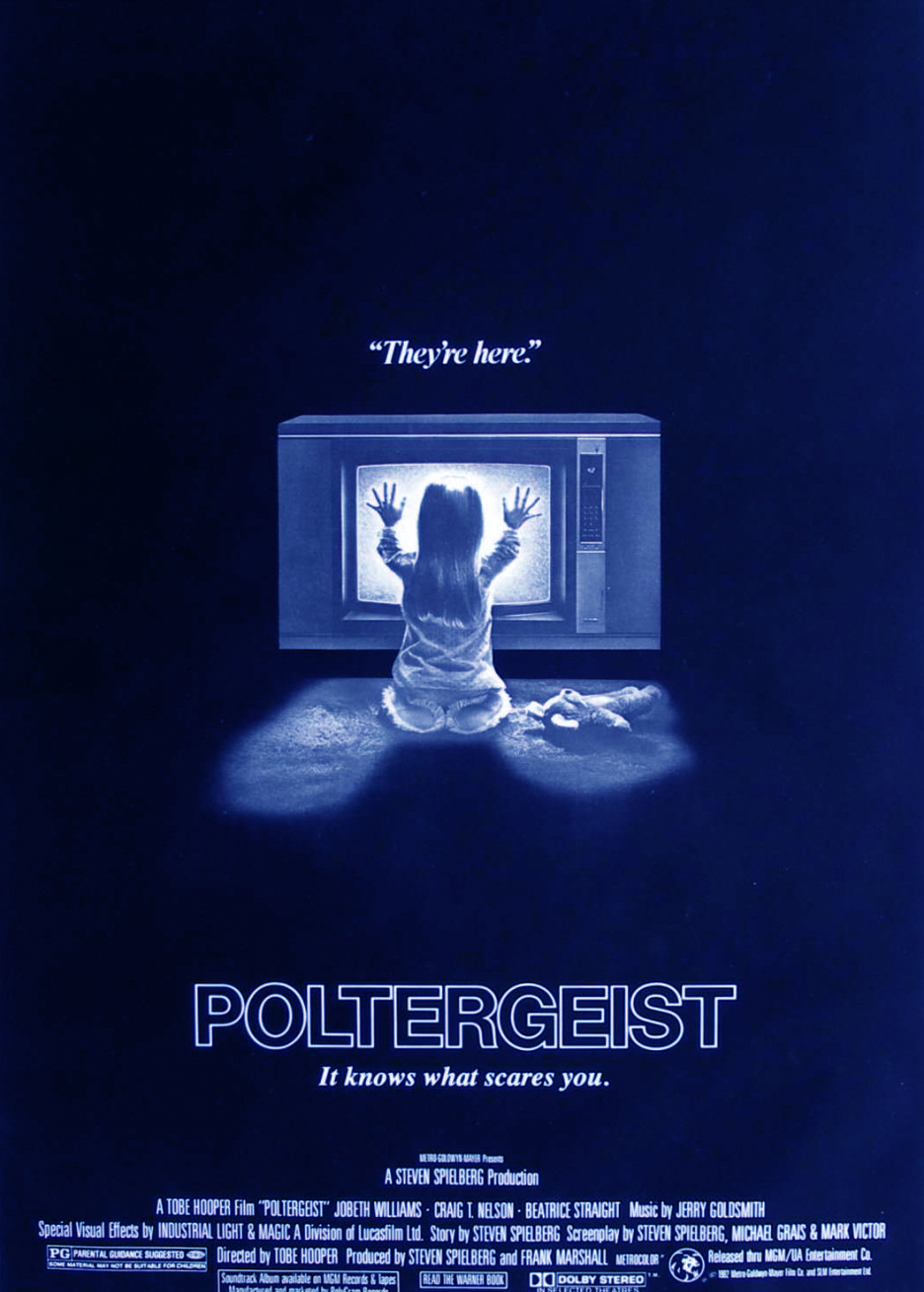
Poltergeist (1982)
dir. Tobe Hooper; starring JoBeth Williams, Craig T. Nelson, Heather O'Rourke

The Freeling family home is haunted by a malevolent spirit who seems to fixate on the youngest daughter Carol Anne. As the spirit begins to make its presence felt, a team of paranormal investigators and a psychic come to help cleanse the house. So much of the language of this film has permeated into pop culture- from the tree attack, to the killer clown, and Carol Anne's amazingly creepy 'they're heeeere!'. Zelda Rubinstein is brilliant in a supporting role as diminutive psychic Tangina Barrons.


The Silence Of The Lambs (1991)
dir. Jonathan Demme; starring Jodie Foster, Anthony Hopkins, Scott Glenn

Is it a horror? Guess it depends on your definition. It's not a slasher flick by any means, but it utilises a lot of the same tools that horror films do, and that's good enough for me. Ably directed by the late Jonathan Demme, this adaptation of Thomas Harris' novel is a masterclass in tension. Whilst the presentation of Buffalo Bill (the killer) is somewhat problematic, brilliant- and Oscar winning- performances by Jodie Foster and Anthony Hopkins make this worth a few hours of your time. 


The Craft (1996)
dir. Andrew Fleming; starring Robin Tunney, Fairuza Balk, Neve Campbell, Rachel True

Released the same year as Scream, The Craft helped to herald a revival in teen horror; other good examples are I Know What You Did Last Summer (1997), Urban Legend (1998) and Halloween H20: 20 Years Later (1998). This twisted tale of a coven of teen witches whose powers get out of hand is a bit of a guilty pleasure of mine- Fairuza Balk is great as the increasingly unhinged Nancy and there's a kick-ass soundtrack too. 


Perfect Blue (1997)
dir. Satoshi Kon; starring Junko Iwao, Rika Matsumoto (voices)

Again, the argument could be made that this isn't exactly a horror film in the strictest sense. But it's a psychological trip that's deeply unsettling. A young popstar, Mima, retires from singing and takes up acting. However, not everyone is happy with this decision. Mima starts getting stalked by an obsessive fan but also seems to be haunted by the ghost of her former self. It's not an easy watch in places but it's a strong piece of film-making. Darren Aronofsky is a big fan, and you can see its influence in Requiem For A Dream (2000) and Black Swan (2010).  


The Blair Witch Project (1999)
dir. Daniel Myrick & Educardo Sanchez; starring Heather Donohue, Michael C. Williams, Joshua Leonard

Well, it had to be, didn't it? A true sleeper hit that kickstarted the vogue for 'found footage' horror. Three students making a film about the legendary Blair Witch disappeared during filming and their footage was found a year later. Coupled with a canny publicity campaign- which actually convinced some people that the actors were indeed missing- this film is a slow burner but, as they get into the woods and the weirdness starts happening, it really grips you. Heather's breakdown has been parodied and sent up relentlessly ever since but the final shots of the film are chilling. 


The Others (2001)
dir. Alejandro Amenabar; starring Nicole Kidman, Christopher Eccleston 

A ghost story with a twist, this might not be an obvious choice for a list of horror films but the wonderfully atmospheric setting and direction provides more than its fair share of surprises. Nicole Kidman is stunning in the central role as a mother who has retired to a mansion on Jersey towards the end of the Second World War with her two children, waiting her her husband to return. When three servants arrive to help the family, the strangeness begins. Who are the strange people that the family keep seeing in the house? The twist at the end is quite inventive and I remember being impressed by it. 


My Little Eye (2002)
dir. Marc Evans; starring Kris Lemche, Bradley Cooper, Jennifer Sky

Five people apply to live in an old house together for six months whilst their every move is recorded and broadcast. If one person leaves, they all lose. There's a million dollars up for grabs... but what will people do in pursuit of that prize? There are some genuinely unsettling moments throughout this film, which- for the time, as 'reality TV' was really getting its hooks into the cultural landscape- had an alarmingly prescient hook.Similar in style to The Blair Witch Project (with the use of various camera angles, including night vision), it's definitely worth a look as a bit of a curiosity.


The Descent (2005)
dir. Neil Marshall; starring Shauna Macdonald, Natalie Mendoza, Alex Reid

Six friends go spelunking in the mountains, but get cut off from their entrance point. As they descend further into the cave complex, it's clear they're not alone. The tension and claustrophobia created in The Descent is, at times, almost unbearable. The relationship and interchanges of the six women is as vital a part to the tension as the location and the unseen threat. If anything, once the Crawlers are revealed, the film loses some of that tension. But the ending... oh my God, the ending. An exquisite- but wholly depressing- gut-punch. Something it has in common with the next film on my list. 


The Mist (2007)
dir. Frank Darabont; starring Thomas Jane, Marcia Gay Harden, Andre Braugher

When a strange mist engulfs a small American town, the townsfolk hole up in a local supermarket. Tensions begin to rise amongst the inhabitants whilst they search for answers to what's caused the mist... and what's hiding in it. A terrifying look at mob mentality and the petty nature of mankind, this isn't a film that will affirm your belief in the inherent goodness of people. People act selfishly, horribly, for their own preservation. There's a really unnerving performance by Marcia Gay Harden as the religious zealot Mrs Carmody (who sees the mist as a herald of the end of days) and the film ends on a despairing, downbeat note.


Tucker & Dale Vs Evil (2010)
dir. Eli Craig; starring Tyler Labine, Alan Tudyk, Katrina Bowden

A molasses-black horror-comedy in a similar vein to Elvira: Mistress Of The Dark (1988) or The Cabin In The Woods (2012), this smart, funny, but also remarkably gory flick tells the story of a typical crazy redneck slasher film... from the redneck perspective. Tucker and Dale just want a quiet weekend at their cabin in the woods. No trouble, no drama. However, when they stumble across a group of college students, the students automatically see them as stereotypical mad hillbillies who want to slaughter them. Nothing could be further from the truth. You'll need a slightly sick sense of humour to really enjoy this, but it's definitely worth a watch. 


So, there's some food for thought. Whilst the blog's been running, we've also discussed some classic horror movies at length, such as the original Psycho, the Evil Dead films, both versions of Carrie, and Alien. Check out our thoughts on these classics and have a very happy Halloween!

Tez


Thursday, 26 October 2017

Review: Thor: Ragnarok (UK Cert 12A)


The God of Thunder is back in his third solo film, this one directed by Taika Waititi (What We Do In The Shadows, Hunt For The Wilderpeople)

When Hela, the Goddess of Death, rises and takes over Asgard, Thor finds himself on the distant planet of Sakaar. Imprisoned and forced to fight in a gladiatorial arena, Thor must find his way back to Asgard to face Hela and prevent the end of days- Ragnarok- from happening...

Tonally, it's very different from the other Thor films- indeed, tonally different to most other MCU films if I'm honest. Whilst the original had an almost Shakespearean feel to it (thanks to director Kenneth Branagh), and the second had a Game Of Thrones aesthetic (thanks to director Alan Taylor), Thor: Ragnarok is a synth-soaked, buddy-comedy, end-of-the-world extravaganza. 

Moreover, it's funny. Like, properly laugh-out-loud funny. The other Thor films have suffered a little from being a bit too strait-laced, a bit po-faced- which seems ridiculous when you're dealing with an outlandish story of gods and monsters. Here, the humour comes thick and fast- but not at the expense of anything else. There's a fine balance between this humour and the more dramatic elements and the incredibly well choreographed fight scenes. 

Chris Hemsworth is as good as ever as Thor; he's got that cocky but charming act down to a tee. Tom Hiddleston is similarly at home in Loki- again, a charming but utterly dangerous being. As always, their fractious relationship- part sibling rivalry, part best buds- forms a cornerstone of the film. Anthony Hopkins really earns his 'and' credit, with a total of about five minutes on screen- but he's superb when he is. Idris Elba gets more to do as Heimdall this time round- removed from his role as gatekeeper for the Bifrost, he acts as a resistance leader trying to save the Asgardians from Hela's undead army. 

Mark Ruffalo is great as Banner/Hulk and brings an extra dimension to the role. He's been Hulk for two years (since he skipped off at the end of Avengers: Age Of Ultron) and has found himself on Sakaar as the Grandmaster's champion. There's a great deal of confusion when he turns back into Banner and is afraid of the change, that he'll lose himself if he Hulks out again. He has great rapport with Chris Hemsworth, which forms part of the buddy-comedy strand. Benedict Cumberbatch's brief appearance as Doctor Strange may not be strictly needed, but it's fun to see them interact (especially after the hidden scene at the end of Doctor Strange) 

Of the new members of the cast, no complaints at all. Cate Blanchett is utterly superb as Hela; I honestly can't imagine any other actress doing the role as well as she does. From her very first entrance into the film- and what an entrance it is- she commands the screen every time she's on it. While the MCU tends to have a bit of an issue with its villains (in that they're either not very good or not drawn out well), Hela is a rounded and very credible threat. Once again, Blanchett shows that's she's one of the best actresses working in Hollywood today. 

Tessa Thompson (Creed) is great as Valkyrie, a drunken scavenger when we first meet her (as she captures and brings Thor to the Grandmaster) but is revealed to be the last of the great warrior women race- previously decimated by Hela. Her relationship with Thor is great; luckily, they eschew any obviously romantic overtures for something more like friendship. 

Jeff Goldblum is just magnificent as the Grandmaster, the ruler of Sakaar. A mercurial, kooky, but ruthless leader, he pits creatures against one another in his Contest of Champions. Again, I can't really imagine anyone else in the role. Karl Urban is great as Skurge, a rough Asgardian warrior with a Cockney accent who takes Heimdall's role as gatekeeper of the Bifrost and becomes a conflicted ally of Hela's. Finally, director Waititi also voices Korg, a blue alien rock being that Thor meets on Sakaar and becomes friends with and who is seriously one of the best characters in the film.    

Thor: Ragnarok was excellent. Whilst the film is 130 miuntes long, it never once felt like it. Fun, bright, brilliant. Simply put, another triumph for Marvel. 

Rating: 5 out of 5

Tez

Monday, 16 October 2017

Cabaret (1972)


Currently on tour of the UK is a revival of the stage musical Cabaret, which had a big screen adaptation made in 1972. 

Based on John Van Druten's 1951 play I Am A Camera- which itself was based on the novella Goodbye To Berlin by Christopher Isherwood- and with music and lyrics by John Kander and Fred Ebb (who also wrote Chicago and Kiss Of The Spider Woman), Cabaret tells the story of a vivacious young showgirl- Sally Bowles- who sings and dances at the Kit Kat Klub, a seedy nightclub in 1930s Berlin. She meets and falls in love with a young writer, but the atmosphere in the city is changing, as the Nazis begin their rise to power. The show opened on Broadway in 1966 with the London premiere happening two years later and featuring Judi Dench in the lead role as Sally Bowles. 

The film was directed by Bob Fosse and starred Liza Minnelli as Sally Bowles, Michael York as Brian Roberts, and Joel Grey as the Master of Ceremonies (reprising his role from the original Broadway production).


Liza Minnelli with director Bob Fosse on set
There are a number of differences between the film and the stage version. In the stage version, Sally is English and the writer (Cliff) is American; in the film, the writer (Brian) is English whilst Sally is American. A major subplot featuring the sweet but ultimately doomed romance between boardinghouse landlady Fraulein Schneider and a Jewish fruit-seller Herr Schultz is removed, although there remains an element of this story in the relationship between Fritz and Natalia. The love triangle element between Sally, Brian and Max doesn't feature in the stage version at all, although subsequent productions have brought Cliff's bisexuality to greater prominence. Several of the musical numbers from the stage show have either been cut or are only heard in instrumental versions.


Sally Bowles is Liza Minnelli's Norman Bates or Ellen Ripley; this is the role that she will be forever twinned with in people's minds. And that's no bad thing. It is a truly iconic role- her introduction at the Kit Kat Klub before she sings 'Mein Herr', in bowler hat and black stockings and suspenders, is a defining moment of 70s cinema, as is her final defiant rendition of the film's title song. Sally is a complicated character; a woman who enjoys 'divine decadence', a vivacious flibbertigibbet, flirtatious, inappropriate, sensuous, yet still having a little-girl-lost quality which stops her being an over-the-top archetype. It may be a cliche but she just wants to be loved. It's an outstanding performance which still impresses, 45 years later. 


 As Sally's love interest Brian, Michael York is a wonderful counterfoil for Minnelli. Brian is quiet, studious, a little shy, like the audience a little taken aback by the force of nature that is Sally Bowles. But he impresses in the quieter moments as their fumbling relationship takes root; Brian's also one of the few people to actively speak up against the Nazis' rise and call people out on their anti-Semitism. Of course, this doesn't get him very far, but it's important to show that not everyone in Berlin was sleepwalking into the arms of the Nazis. 

As the Master of Ceremonies for the Kit Kat Klub, Joel Grey is a consummate all-rounder. From the opening notes of 'Wilkommen', he's your guide to the hedonistic world of the club and its refuge against the real world. A capering, white-faced, rouged puppet, he sings and dances as the clouds begin to gather and keeps the club together. He is never seen outside the Klub and all his musical numbers echo what is happening in the outside world- a Tyrolean hand-slapping dance number is cut between scenes of a man being beaten up, and the truly shocking 'If You Could See Her' with the gut-punch final line of 'she wouldn't look Jewish at all' (sung to a woman in a gorilla suit) comes as a group of Nazi thugs kill Natalia's dog. 

As goes the other cast members, Helmut Griem is charming as rich playboy Maximilian von Heune, with whom both Sally and Brian have a relationship, whilst Fritz Wepper and Marisa Berenson are both similarly lovely in their supporting roles of Fritz and Natalia. Fritz is passing as a Christian, although is Jewish, whilst Natalia is Jewish; their relationship is quite endearing as Fritz must decide whether to 'out' himself as Jewish in order to marry the woman he loves (no mean feat given the atmosphere of the time). 

The film's treatment of the Nazis is interesting. At the beginning, a Nazi is thrown out of the Kit Kat Klub; their rhetoric is not accepted there. However, the growing tide of the party starts to come to the fore, culminating in a scene in a beer garden where the patriotic song 'Tomorrow Belongs To Me' is sung by a young man who is revealed to be wearing a Hitler Youth uniform. As the other patrons start to join in, Brian looks uncomfortable. After this, a can-can routine at the Klub turns into a goose-step (although it's not clear whether this is mockery or not) and Brian gets beaten up after opposing Nazis in the street. At the very end of the film, a shot of the club shows men in Nazi uniforms sitting in the audience.


Visually, the film is really interesting and there's a nice contrast in both style and camera-work between the club and the real world. And also, whilst this is a musical, all of the musical numbers- bar 'Tomorrow Belongs To Me'- take place in the Klub; Sally doesn't suddenly burst into song whilst in bed with Brian. Of the musical numbers, Minnelli gets the lion's share of the good ones- with 'Mein Herr', the beautifully poignant 'Maybe This Time' and the title song 'Cabaret' becoming well known. Grey doesn't get short-changed, however, with the wicked 'Two Ladies', the magnificent duet 'Money, Money' with Minnelli, and the opening number 'Wilkommen'. 


Cabaret holds the record for the most Oscars won by a film which didn't win Best Picture. Nominated for ten Academy Awards, it won eight; Minnelli and Grey won Best Actress and Best Supporting Actor respectively, and the film was also honoured for its cinematography, art direction, sound, and editing. But perhaps the biggest surprise on the night was Fosse winning Best Director (over Francis Ford Coppola for The Godfather, which went on to win Best Picture). 

The film also won the Golden Globe and BAFTA Film Award for Best Film, with Minnelli and Grey also winning those awards for their performances. In 1995, Cabaret was also selected by the Library of Congress as one of twenty-five films to be entered into the National Film Registry that year as a work that is 'culturally, historically, or aesthetically significant'. It's also seen as a landmark film in LGBT cinema as it deals with themes of sexuality in an unusually frank and non-sensational (and non-judgemental) way. 


Liza Minnelli and Joel Grey with their Oscars at the 1973 ceremony
Cabaret is a musical with a difference; it's certainly no Sound Of Music. There's no happy ending here, and there's no attempt to soften or lighten some of the more dark material. It was the first musical ever to be given an X rating (although now it's a 15 certificate in the UK). So, if you think all musicals are trite and twee and everyone lives happily ever after, Cabaret gives the lie to that. Perhaps take Sally's advice and 'come to the cabaret'. It's an experience you won't forget in a hurry.

Tez


'Life is a cabaret, old chum. Come to the cabaret!'